
Eddie Murray
1990 · Fleer · Fleer
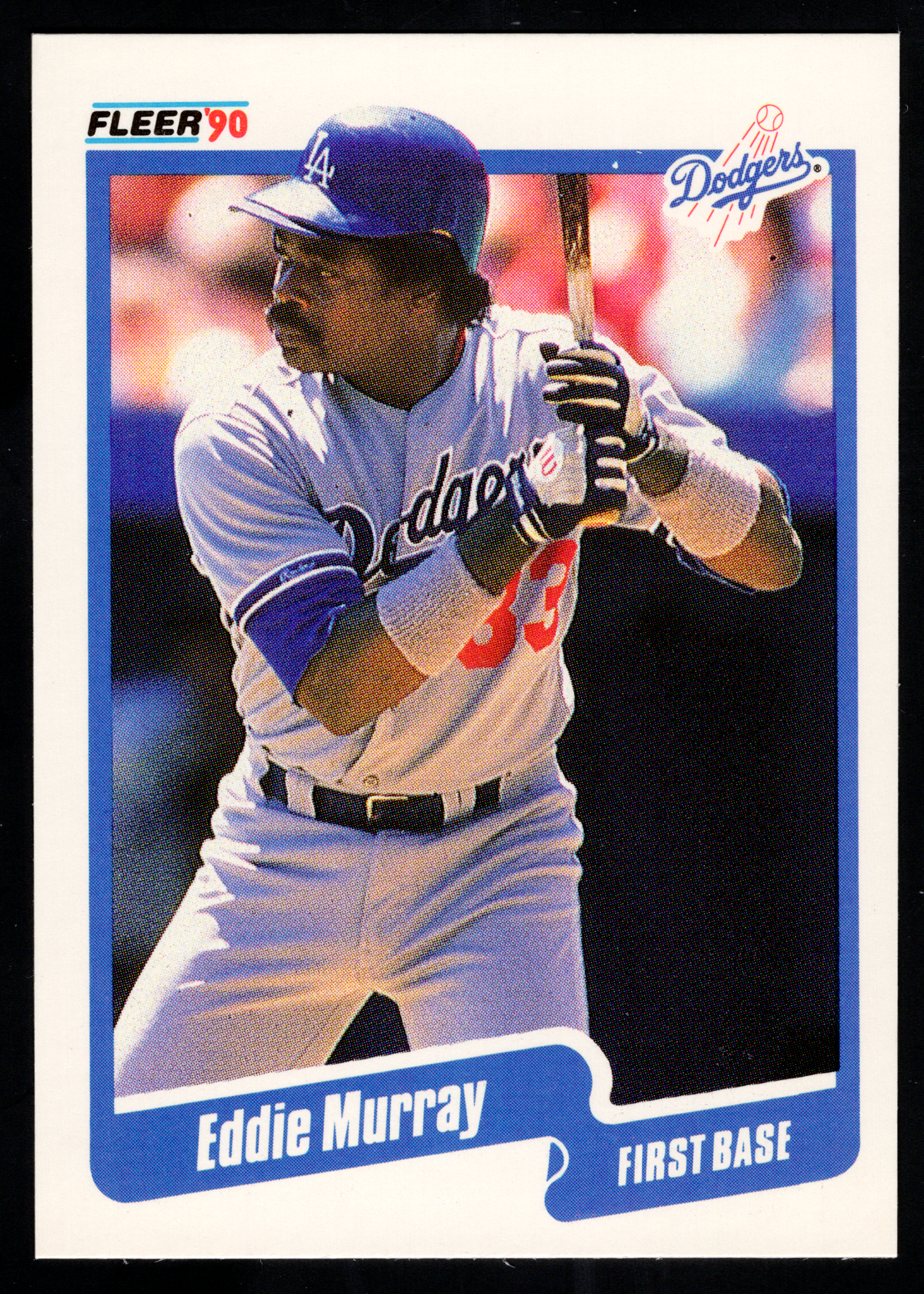
Quadrant 1 — Centering
How to read this data
Centering is measured, not eyeballed: the printed frame and the outer card edge are located at sub-pixel resolution, and the border ratios come directly from those measurements.
- Ratios:
- Left/right and top/bottom border splits. Official buffers: a front within 60/40 and a back within 75/25 measure as perfect; the front counts for 80% of the centering subgrade, the back 20%.
- Overlay:
- Cyan rectangle = the card's outer edge; orange = the printed frame. Parallel, evenly spaced rectangles are what a well-centered card looks like.
Centering Analysis
MOSES isolates the inner artwork frame and outer card border at sub-pixel resolution, then measures the four border margins to derive precise left-to-right and top-to-bottom ratios on the front and back faces.
- Frame type detected: bordered. MOSES extracted the inner artwork frame and outer card border using Sobel-edge detection at sub-pixel resolution.
- Front face measured 60/40 left-to-right (10) and 66/34 top-to-bottom (8.8).
- Back face measured 61/39 L/R and 54/46 T/B.
- Border margins (px): L 60.0 · R 39.9 · T 77.7 · B 40.4.
- Limiting axis: Top/Bottom. This axis drives the composite centering subgrade.
- Composite centering subgrade locked at 9.
Quadrant 2 — Corners
How to read this data
Every corner is graded three ways at once — an AI examiner reads the photo, a trained classifier and reference library compare it against thousands of graded corners, and where the boundary is clean enough, the corner is physically measured from its silhouette. Everything below speaks one language:
- Corner annotation:
- Each corner's word is its annotation class, assigned directly from the decimal: Pristine 9.9+ · Sharp 9.75–9.8 · Very slight touch 9.4–9.7 · Slight rounding 9.05–9.3 · Minor rounding 8.2–9.0 · Moderate flattening 7.0–8.1 · Heavy rounding below 7. Same vocabulary used to annotate and train the corner models. Whitening and fray are separate observations from the color photo. The weakest corner anchors the corners subgrade.
- Tip angle:
- The angle where the two cut edges meet, found by fitting a straight line along each edge. A factory-square corner measures 87–93°. It is a squareness test, not a ranking — everyday wear happens at the very tip and leaves the edges untouched, so a worn corner can still measure ~90°. Only a skewed or crushed corner fails this test.
- Deficit:
- The percentage of material missing from the tip wedge — the gap between where a perfect tip would be and where this card's material actually ends. Under 2% means the tip is fully present.
- Roughness:
- How much the cut edge waves compared to a perfectly straight line, in pixels. A clean factory cut measures under about 2px.
- Whitening & fray:
- Surface wear read from the color photo — geometry cannot see it. Severities are the grading rubric's own words: trace, minor, obvious, heavy for whitening; light, evident, exposed for fray. This is how a geometrically square corner can still lose points: to whitening, not shape.
- Visual proof:
- Red and blue lines are the fitted cut edges; the yellow ring marks where a perfect tip would be; the green ring marks where material actually ends. Rings stacked on top of each other mean a square corner.
- When numbers are absent:
- If printed design runs along the boundary, the instrument cannot measure reliably. Those corners show the photo only, and the grade rests on the full model consensus. Factory-rounded cards (Pokémon and other TCGs) are die-cut with a corner radius, so square-tip measurements do not apply — those corners are graded by the model consensus and the rounded-corner reference library.
Read the full methodology: How to Grade Card Corners — the CardFax white paper →
Corners Inspection
Every corner is independently cropped from the source scan and evaluated for whitening, chipping, and softness. 8 of 8 corners returned a confident reading; the weakest corner anchors the composite subgrade.
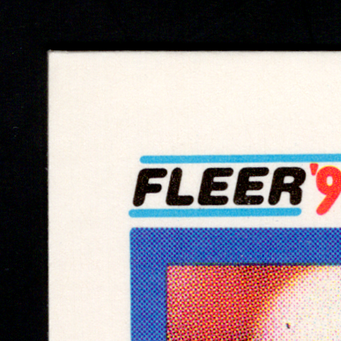
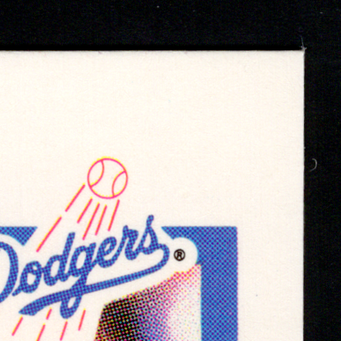
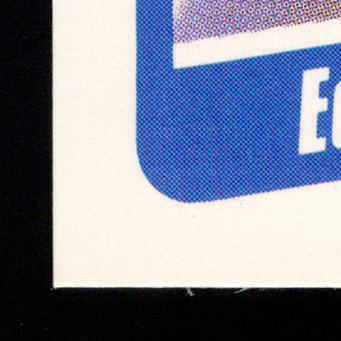
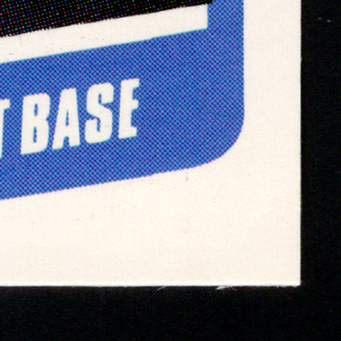
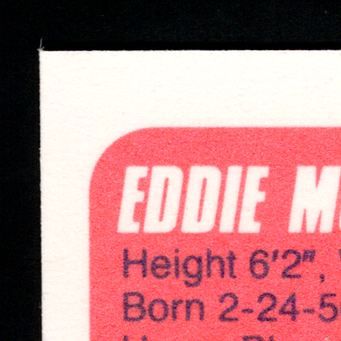
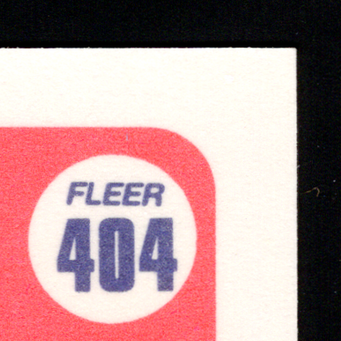
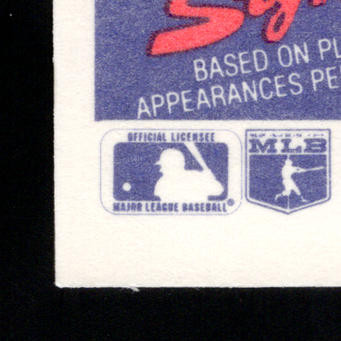
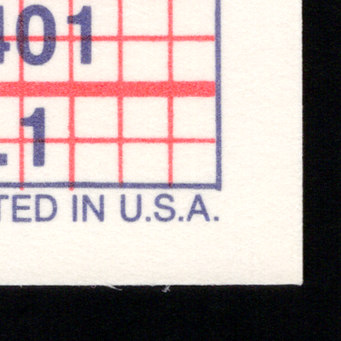
Every corner is graded by the same MOSES multi-model consensus: an AI examiner reads the high-resolution crop, a trained classifier and reference library compare it against thousands of graded corners, and adjudication rules — including physical silhouette measurement where the boundary allows — settle the final number. The full instrument record is preserved with the card.
All 8 analyzed corners averaged 9.4. Strongest corner Front · Top Right at 9.8; weakest Front · Bottom Right at 9. Composite corners grade 9.4.
Quadrant 3 — Edges
How to read this data
Each of the four edges is graded on the official scale from full-resolution strips of the actual scan, front and back.
- Edge grade:
- Reflects the worse of the front and back condition for that edge; the weakest edge anchors the edges subgrade under the official formula.
- Condition notes:
- Plain-language findings for both faces — chipping, roughness, and specks show most clearly on dark card stock.
- Strips:
- Native-resolution slices of the scan itself, not re-renders — what you see is the actual edge.
Edges Inspection
Each of the four card edges is isolated and scanned at full resolution across color and etched-luminance passes, surfacing whitening, fraying, dings, and rough cuts that the eye routinely misses.




FRONT: The top, right, and left edges are clean with no visible white spots, chipping, or roughness. The bottom edge shows minor visible roughness with some tiny fibers along the cut line. BACK: The top, right, and left edges are also clean. The bottom edge shows very minor roughness, less pronounced than the front. Overall, three edges are nearly perfect, while the bottom edge has minor visible roughness, resulting in a lower grade for that edge.
Quadrant 4 — Surface
How to read this data
The surface is examined in multiple independent passes over both the color scan and an etched relief view that exaggerates texture, so gloss cannot hide pressure marks.
- Markers:
- Each marker pins a finding to its location on the card. Flat, round dots under the gloss are print artifacts from the factory, not damage.
- Etched view:
- A relief rendering of the same scan — creases, dents, and scratches cast visible ridges in it.
- Surface subgrade:
- The whole-number floor of the surface grade caps the card's overall grade under the official formula.
Surface Inspection
MOSES generates an etched defect map of the card face, then weights each detected scratch, print line, and pressure mark by severity and location. 4 markers were geolocated on this card and annotated on the overlay below.
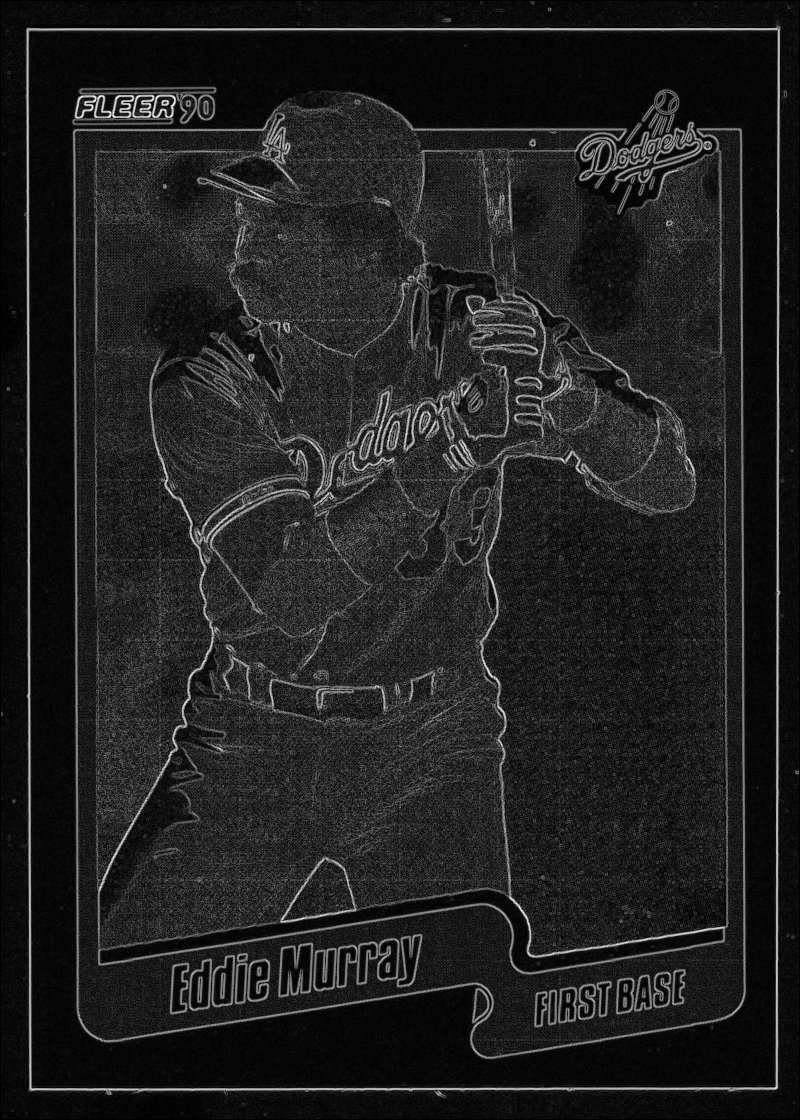
Drag to compare · Color ↔ Etched · Markers stay on
Circled marks are the graded findings — each one verified in the color view. Other white speckle in the etched view is foil grain and surface dust lit up by the etching, not damage on the card.
Surface findings: minor print defect (upper right); minor print defect (upper left); very minor print defect (upper center); very minor print defect (upper right).
MOSES Synthesis
Near Mint–Mint
Strong eye appeal with one or two flagged axes. Composite assigned after four independent inspection passes synthesized into a single deterministic grade.
- Final composite grade 8 assigned by MOSES after independent inspection of centering, corners, edges, and surface.
- Subgrades inspected — Centering 9, Corners 9.4, Edges 8, Surface 8.6.
- Limiting factor identified: Edges at 8.
- Surface inspection logged 4 markers (annotated on the surface page).
- Frame detected as bordered; inner artwork frame and outer card border isolated via Sobel-edge extraction at sub-pixel resolution.
- Corner inspection scored 8 of 8 individually (4 per side); spread of 0.8 between strongest and weakest corner.
- Surface pass logged 4 annotated markers; each marker is geolocated on the card and visible on the Surface Inspection page.
TC360 Population Report
Verification
This card was inspected and graded by TradingCard360.
View Grader ProfileThis CardFax™ record is generated exclusively by TradingCard360® and serves as a specialized digital registry for trading cards and sports memorabilia.