
The Corner That Graded Sharp
A grader's thumb caught what the scan called sharp. The disagreement became a measurement, the measurement became a versioned release, and the card's record was corrected — all in one day. This is the closed loop, documented end to end.
Section · 01
The disagreement
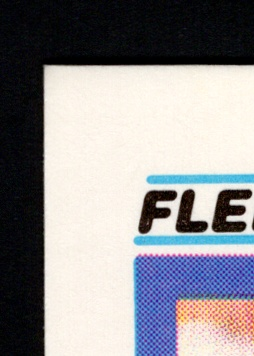
Serial 2582110, a 1990 Fleer, graded September 24, 2026. On the front top-left corner, every analysis layer agreed. The examiner layer read the tip as sharp — no rounding, no whitening, no fray — and scored it 9.9. The detection layer classified the corner in its top band at 99.9% confidence. The reference-library match landed at 9.3. The consensus blend issued 9.7.
Then the grader picked the card up. Held flat between two fingers, the top-left corner carried a slight curl — plain to the thumb, invisible to every layer.
Section · 02
What a flat scan sees
The corner rubric measures in-plane damage: rounding, flattening, whitening, fray, crease — every way a corner's outline or surface changes within the plane of the card. A curl is out-of-plane. The corner bends toward the viewer: the tip stays a true point, nothing whitens, the outline stays crisp. Each layer answered the question it was asked, and answered it correctly. The card was asking a different question.
Section · 03
The measurement
A curled corner lifts slightly off the scan bed, and paper that sits farther from the glass catches less light. So a curl leaves a fingerprint a flat scan can capture: a soft luminance shadow converging on the tip, while the outline stays in perfect focus. Measured on the card's own corner crops — luminance levels below each corner's white-border plateau:
| Front corner | Tip shadow | Reading |
|---|---|---|
| Top-left | 17.1 | nearly 3x the card's baseline — the flagged corner |
| Top-right | 13.5 | elevated — the top edge bows, strongest toward the left |
| Bottom-left | 6.3 | baseline |
| Bottom-right | 3.9 | baseline |
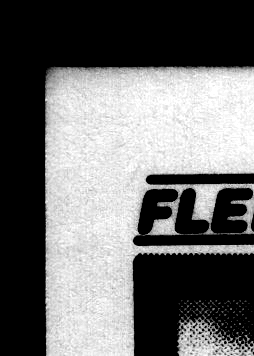
Top-left — shadow at the tip
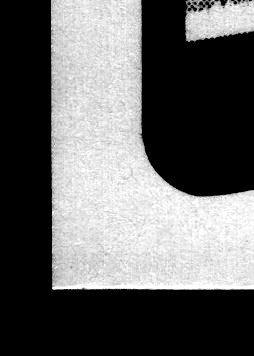
Bottom-left — clean to the boundary
The confirmation came from the other side of the card. The same physical corner, seen from the back, measures 0.4 — no shadow at all. A shadow on one face that is absent on its mirror, graded smoothly with distance from the tip, is a curl — and the asymmetry gives its direction. This corner bows toward the front: it lifts off the glass when the front is scanned and presses flat when the back is.
Section · 04
The release
MOSES 2.14.0 shipped the same day with a corner lift scan. Every grading batch now measures the tip shadow on all eight corners, normalizes each reading against the card's own median — every card carries its own baseline — and cross-checks the front/back mirror pair before flagging a possible curl. The scan runs in shadow mode: measured and recorded on every card graded, with zero effect on grades, until the production distribution calibrates the thresholds and physical spot-checks confirm them. Then it activates — for new gradings only.
It activated faster than planned. The flag went two-for-two against physical review — this card's top-left, then a second card whose flagged corner was independently the examiners' worst-graded corner — and enforcement shipped as MOSES 2.15.0 the same day: mirror-confirmed curls now deduct at grade time, for new gradings only. A flag without its mirror measurement still deducts nothing.
Section · 05
The correction
With the measurement in hand, the corner was re-examined and lowered: the front top-left from 9.7 to 9.4, and the corners quadrant from 9.5 to 9.4. The overall grade did not move — the card's edges, at 8.0, already capped it at 8. The correction, its reason, and its measurement sit on the card's audit record. That is how grades change under this standard: through measured re-examination, confirmed or lowered, never quietly.
Section · 06
The loop
Most grading software is frozen the day it ships. This report documents one pass of the loop that isn't: a human disagreement in the morning, a measurement by midday, a versioned model release in the afternoon, and a corrected record by close of business. The card taught the model. The next card benefits.
CF-FR-2026-001 · v1.0 · Published September 24, 2026 · Model: MOSES 2.14–2.15 · Registered on the CardFax