
The Measured Read
A pregrade tool read the same card's centering twice from handheld phone photos and called it roughly 65/35 both times — a collector who knew the card disagreed. So the opinion was replaced with an instrument. The photo was geometrically straightened, the borders were measured from pixels, and the ratios came back 50/50. On a validation card carrying a registered CardFax centering grade of 10, the measurement returned 10 — three runs, identical to the digit. This is the record of how centering on a phone stopped being a guess.
Section · 01
Centering is not a judgment call
Of the four quadrants a card is graded on, three are verdicts about condition — corners, edges, surface. Centering is different: it is a ratio. How wide is the left border against the right; how tall is the top against the bottom. A question with a numeric answer should be answered by arithmetic, not by impression. The problem is that a handheld phone photo lies about the arithmetic. Tilt the phone a few degrees and perspective compresses one side of the card: a dead-centered card photographs as 65/35. The tool wasn't misreading the image. The image was misrepresenting the card.
Section · 02
Three stages between the hand and the number
The fix is a chain, each stage covering for the one above it.
The bubble level. A live squareness instrument over the camera that coaches the hand into a level shot before the shutter ever fires — it earns its own section below.
The perspective warp. At capture, the detected corner quad is warped to a true 2.5 × 3.5 rectangle — the same mathematics document scanners use to flatten a receipt. Whatever tilt survived the human hand is removed by geometry. The image that leaves the phone is the card as a plane, not as a photograph of one.
The measurement. On the rectified card, software walks inward from each edge at dozens of points per side and finds where the border ends, in pixels. Four border widths become two ratios, and the ratios run through the published CardFax centering standard — a 60/40 tolerance inside which no deduction exists, and tiered deductions beyond it. The centering subgrade that results is not an estimate carrying a confidence level. It is a measurement.
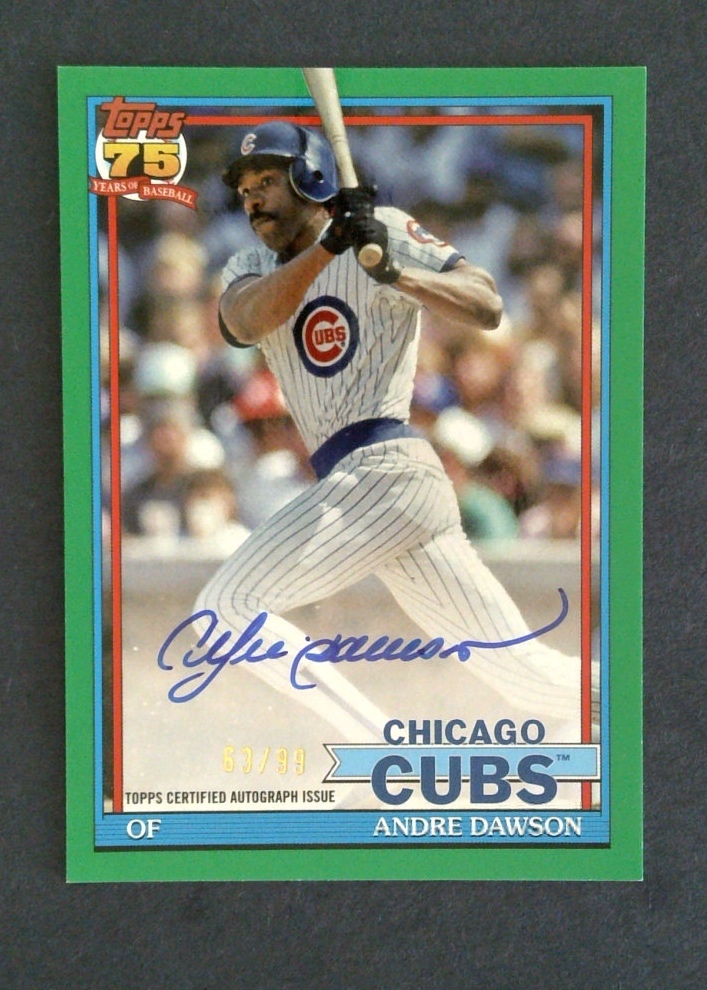
As captured — tilted on the bed
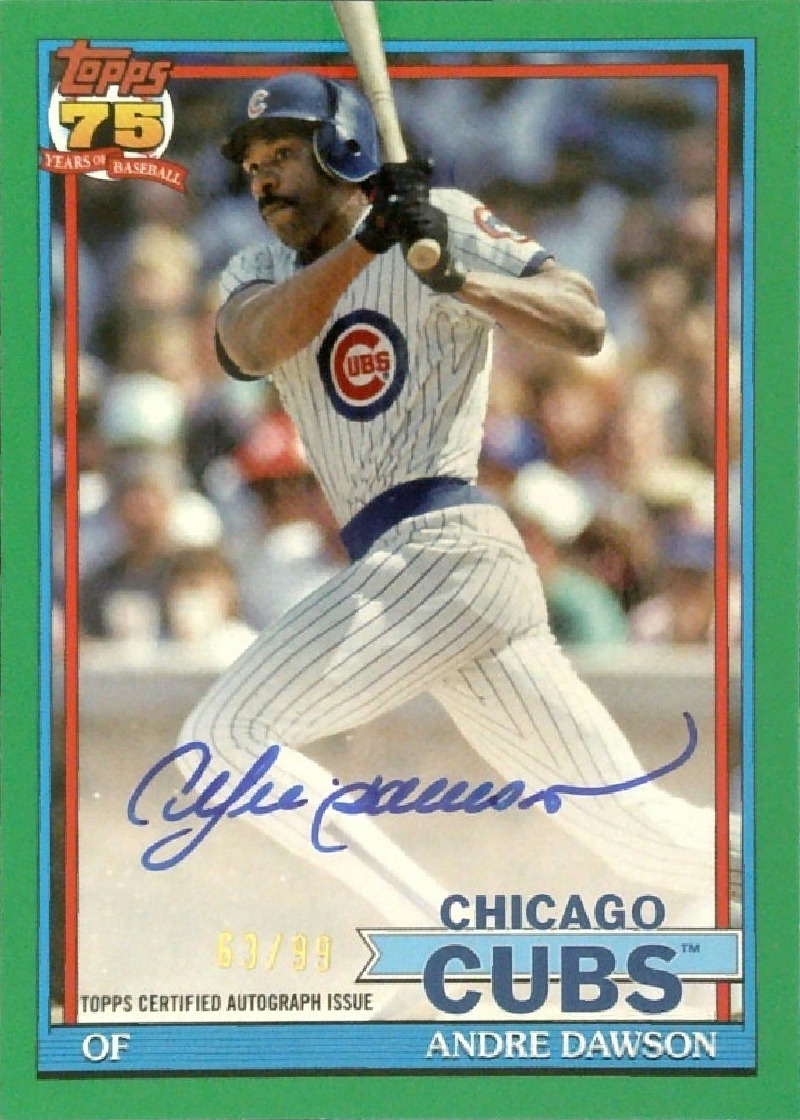
After the warp — a measurable plane
Section · 03
A contractor's level, made of geometry
The interface for all of this is a tool every builder already trusts: a bubble level, floating over the live camera. Tip the phone and the bubble drifts; square up over the card and it settles into the ring and turns green. Nobody reads a manual for a bubble level. The hand corrects before the mind finishes the sentence — which is the entire point, because the correction has to happen before the shutter, where it costs nothing.
What makes the design worth documenting is what the bubble is made of. It uses no gyroscope and no motion sensor. A gyroscope measures the phone against gravity — which silently assumes the card is lying on a perfectly level surface, and breaks the moment the card sits on a toploader, a couch, or in the collector's other hand. This bubble measures the phone against the card itself. The scanner finds the card's four corners in every frame; a card square to the lens projects as a true rectangle with opposite edges equal, and a tilted phone projects a trapezoid. The mismatch between opposite edges — a few subtractions per frame — is the bubble's position. The only relationship that matters to a centering measurement, phone-to-card, is the one being displayed.
Two details finish the instrument. The ring is not decoration — it is drawn at the tolerance where geometry becomes measurable, so “bubble inside the ring” and “this capture can carry a measured centering” are the same statement. And the bubble is honest about its own readiness: while the vision library that finds the card's outline is still warming up, the vial says so instead of pretending — the same refusal-over-pretense rule that governs the measurement itself, applied to a circle of pixels the size of a thumbnail.
Section · 04
A measurement that can say no
The dangerous version of this feature is the one that always returns a number. This one proves its own validity first, and recuses itself otherwise. The border depth is sampled at many points along each side: on a truly rectified card the profile is flat; on a tilted or rotated image it trends; on a full-art card there is no uniform border at all. Trending, noisy, implausibly thin, or missing borders all end the measurement — and the tool falls back to its estimator, with confidence priced accordingly. In testing, the gates rejected a rotated raw scan, a deliberately corrupted warp, a borderless full-art card, and a card photographed inside a holder. Every refusal was correct. A measurement you can trust is one that knows when it isn't one.
Section · 05
The evidence
The disagreement that started it. A modern chrome card, photographed in hand, read “roughly 65/35 left-to-right” on two separate runs — the estimator was consistent, and consistently wrong, because the input was consistently tilted. After the level-warp-measure chain shipped, the same card came back: 50/50 left-right, 43/57 top-bottom — centering 10, high confidence, measured. The collector's eye had been right all along, and now the pixels agreed with it.
The validation. A card already registered on the CardFax — graded on the engine's controlled scans, carrying a registered centering subgrade of 10 — was run through the phone pipeline. The measurement returned 46/54 left-right, 48/52 top-bottom: inside the tolerance, grade 10. Three consecutive runs produced the identical ratios and the identical grade, digit for digit. The estimator eyeballing the same card had wobbled between 35/65 and 40/60 run to run. Instruments repeat; impressions vary.
The formula, verified. Before touching a real card, the measurement ran against synthetic cards of known geometry — nine cases covering the standard:
| Known geometry | Deviation | Measured grade |
|---|---|---|
| Dead centered — 50/50 both axes | 0 points beyond the buffer | 10 |
| Exactly 60/40 — the tolerance edge | 0 points beyond the buffer | 10 |
| 70/30 — visibly off | 10 points beyond | 8 |
| 80/20 — badly off | 20 points beyond | 5 |
| Tilted, full-art, undersized inputs | geometry unprovable | refused |
Section · 06
What changes for the collector
On a bordered card shot square — the bubble makes square the path of least resistance — the centering tile on a mobile pregrade now reads like an instrument: “Measured 55/45 left-right, 52/48 top-bottom,” at high confidence, repeatable to the digit. The quadrant most corrupted by handheld photography is now the quadrant least dependent on them. And because the whole pregrade is derived from its quadrants by law — average, held at the weakest — a measured centering stabilizes the final number with it. Full-art cards, textured borders, and cards shot through holders still receive an estimator's opinion, priced in confidence, because pretending to measure the unmeasurable is exactly what this tool refuses to do.
Section · 07
What this is — and isn't
A pregrade remains an opinion from photos — a range and a confidence, never a registered grade. Registered CardFax grades come from controlled scans on the CardFax engine, where every quadrant is instrumented. What this field report documents is the engine's doctrine crossing over to the phone in the one quadrant where a phone can honor it fully: measure what is measurable, estimate only what is not, and say plainly which one you did. One validation card is a demonstration, not a study; the measurement now logs on every mobile pregrade, and its shadow runs on every browser-extension read, so the ledger grows with every card.
CF-FR-2026-003 · v1.0 · Published September 26, 2026 · Tool: CardFax Pregrade (Beta) · Card Grading Engine powered by MOSES